Are You Typecasting Yourself?


When we first discover our season or archetype, it can be so tempting to box ourselves in. We find a dress shape, lipstick color, or pant length that works, and we stick with it.

In the beginning, this is helpful. I advise my clients to focus on a couple easily identifiable colors or clothing shapes before trying to revamp their entire wardrobe all at once. But the more comfortable we get, the more we’ll ideally branch out and take risks.

We all have endless permutations of style creativity at our disposal. Discovering where we can successfully push the boundaries of our season or archetype (which doesn’t necessarily mean straying outside of them) can add dynamic flavor to our personal style. My rhinestone snake earrings are a great example of this. Likewise, it’s good to know where pushing the boundaries does more harm than good.

I enjoy thinking of personal style as a collection of episodic novels, a la Nancy Drew. They share the same mood and protagonist, but each story stands and shines alone.

Now that I’ve been redraped as a Bright Spring, I resonate even more with that concept. I’m no longer drawn to many of the styles and outfit formulas that I favored as a Dark Autumn. I donated all of my once-beloved half-circle skirts, and I’m not losing any sleep over it. They were emblematic of a wonderful but bygone era, my Modern Wood Nymph phase. I said a Marie Kondo-style thank you and goodbye, and moved into my tropical garden party era.

Allowing space for play, experimentation, and change as we move through our lives is a key component to finding joy in personal style. Don’t be afraid to create new combinations of clothing you already own, to try on pieces you think might be too “out there,” or to find ways of incorporating design motifs you love, even if it’s just in an earring. Every day needs an outfit. And if today’s outfit doesn’t work out, there’s always tomorrow.

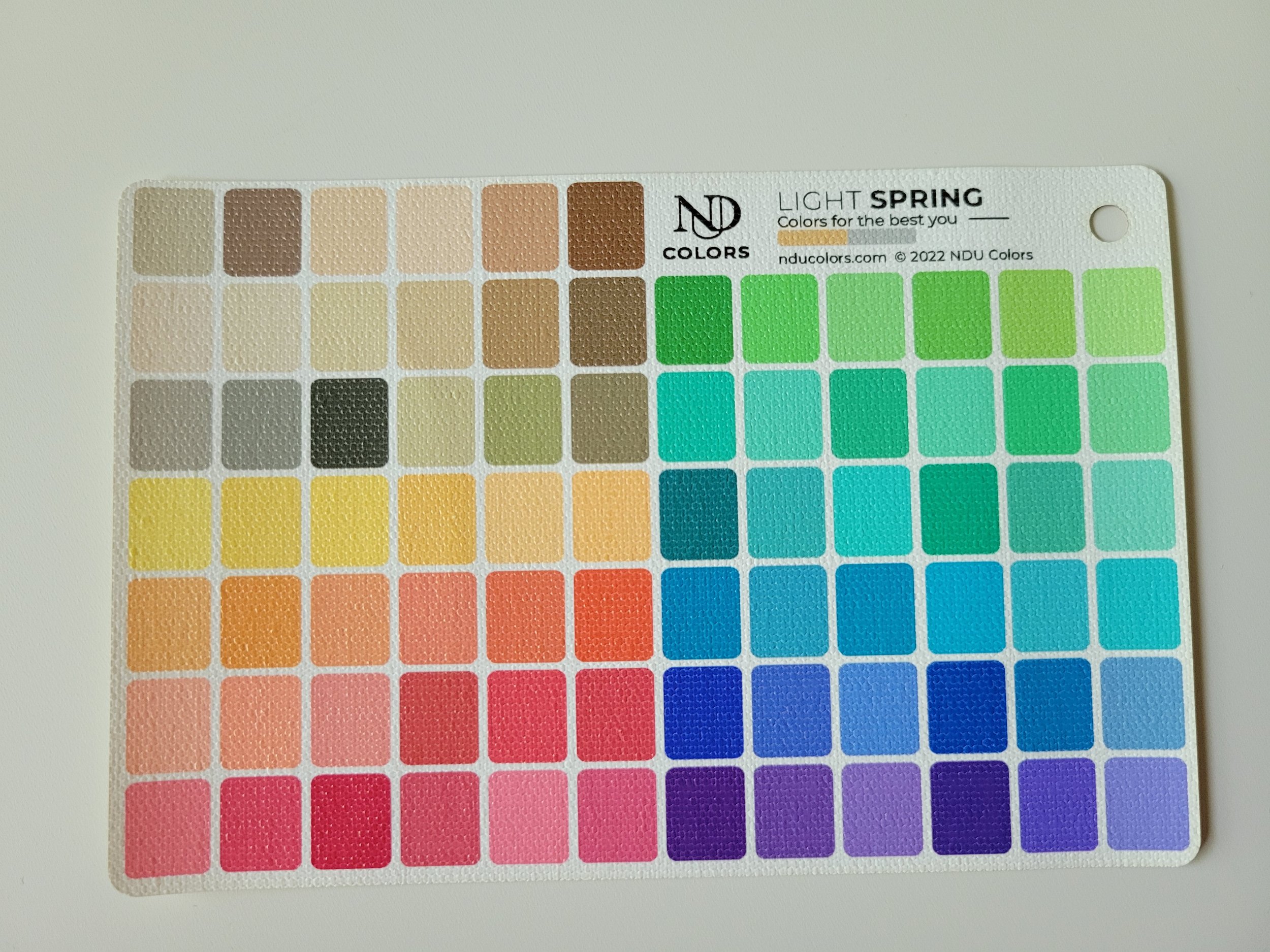
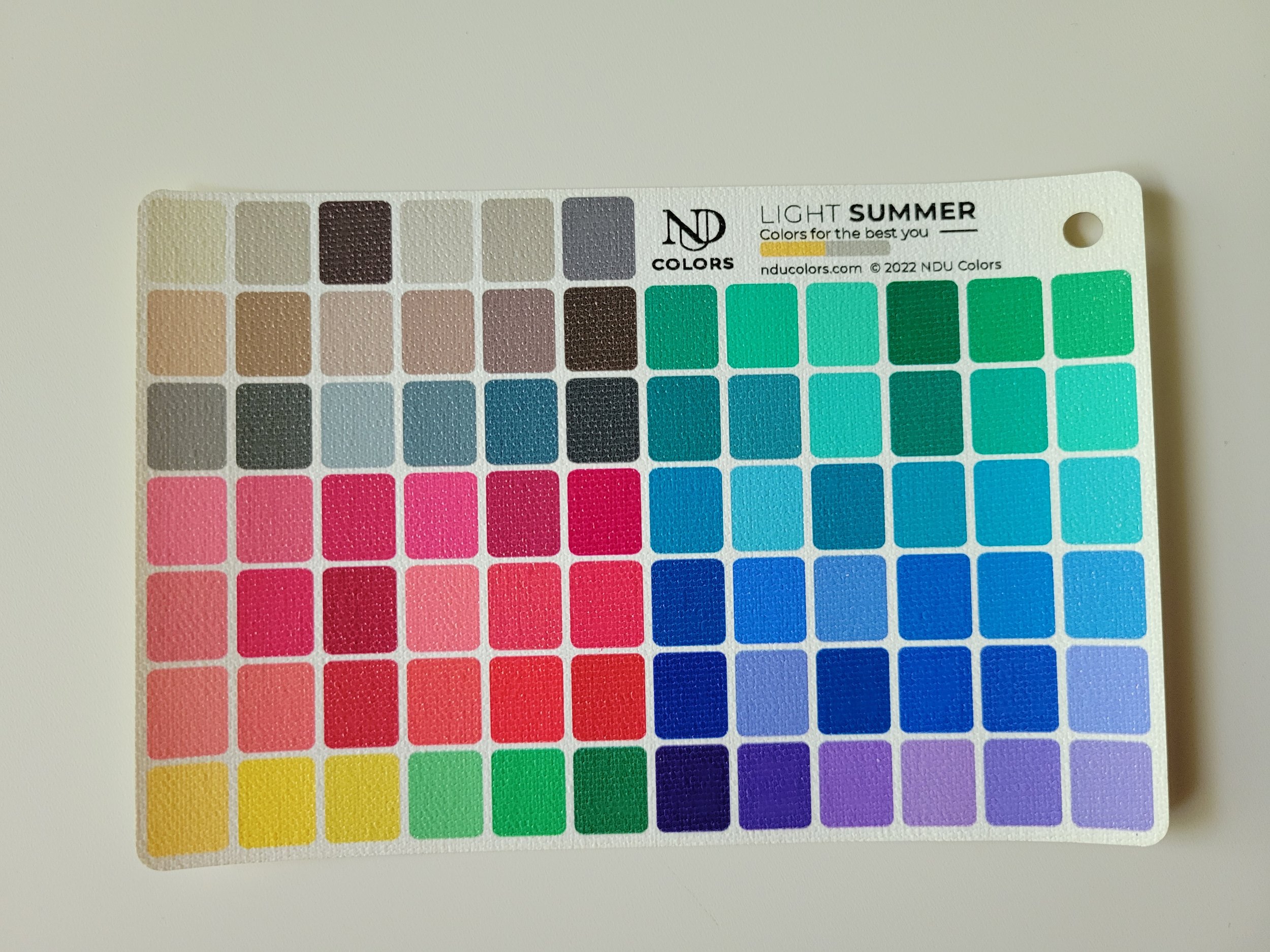
What's the Difference: Light Spring vs Light Summer

Light Spring and Light Summer are another highly-requested seasonal combination, and I can see why! While the Lights don’t get as much attention online as other seasons do, their palettes are just as important, and can be no less confusing.


First, let’s explore their technical parameters:

Light Spring and Light Summer are situated between True Spring and True Summer on the seasonal color clock, meaning that they’re both blends of True Spring (warm, saturated, medium contrast) and True Summer (cool, muted, medium. contrast). 

Light Spring has a base of True Spring, with a dash of True Summer’s coolness and softness. Light Spring is a Warm-Neutral season. Colors are fresh and juicy, and color descriptions and keywords often evoke food or warm locales, with words like honeydew, peach, coral, and sand.

Light Summer has a base of True Summer, with a dash of True Spring’s brightness and warmth. Light Summer is a Cool-Neutral season. Colors are fresh and serene, and color descriptions and keywords often evoke flowers and beaches, with words like aqua, periwinkle, rose, and lilac.

In the Sci/Art system, it’s important to note that there is no purely neutral season made up of 50/50 warm and cool colors. The seasons we refer to as Neutral are still either more warm or more cool. This term distinguishes them from the True seasons, which are comprised of purely warm or cool colors.

It’s also important to remember that “Light” and “Soft” are not synonymous terms! Light season people need brightness and vivacity in their colors, although not as much as their Bright counterparts. Very muted colors, like we see in the Soft seasons, are too dusky for the Lights.

Lightness is the most important characteristic of Light Spring and Light Summer. While Light season people don’t necessarily look lighter than everyone else (though they can), they’re enhanced by lighter, brighter colors in makeup and clothing. They are easily dragged down by colors that feel too heavy or dark. 

What happens when a Light Spring wears Light Summer colors, and vice versa?

Too-cool colors can turn Light Spring skin ashy, or lips slightly blue. There may be an impression of dry/flaky skin, or shadowing from the relative darkness and coolness of Light Summer. 

Too-warm colors can turn Light Summer skin more yellow than it naturally is, or lips slightly orange. There may be an impression of overly shiny skin, or an ungrounded feeling of “floating” in the relative lightness and warmth of Light Spring. 

How do these two seasons wear their makeup?

Light Spring will go for an overall warmer and juicier look. Eyeshadows like MAC Orb and Stila Kitten are at home here, along with eyeliners like Clinique True Khaki. For cheeks, peach and melon shades like Benefit GALifornia or NARS Luster are beautiful. And for lips, light coral pinks like Bobbi Brown Guava, NARS Niagara, or 12 Blueprints Honey Mandarin.

Light Summer will go for an overall cooler and rosier look. Eyeshadows like MAC Yogurt and Laura Mercier Sable are at home here, along with eyeliners like Clinique Blue Gray. For cheeks, fresh petal pinks like Surratt Tu Me Fais Rougir or Tarte Dollface. And for lips, light raspberry pinks like Dior Be Dior, Tarte Pink Peony, or 12 Blueprints Come Dancing. 

Both of these seasons are enhanced by makeup with translucent or somewhat dewy finishes, including cream blush, highlighter, lipgloss, and/or shimmer shadows. Light Summer may err on the side of a more petal-matte skin finish, while Light Spring can get away with more shine.

Can these two seasons “cheat” with some of the same colors?

Technically speaking, colors belong to one palette or the other, and people will be most enhanced and magical in their own season. But in real life, a Light Spring may occasionally wear a Light Summer sky blue, or a Light Summer may reach for a Light Spring coral without feeling the effect too terribly. The success of this can depend on the size of the piece (an earring vs a sweater vs a shoe), where on the body the color is worn, and the individual in question. These two seasons do share some makeup successfully, particularly in ivory and taupe eyeshadows, and in lipsticks on the cooler coral spectrum.

If you’d like to explore these two seasons further, check out my Pinterest boards:

How to Harmonize Your Clothes With Your Body Type

One of the very best ways to feel good in your clothes is to make peace with your natural body type. And I’m not talking about your weight.

I’m talking about your height, your facial features, your torso shape, your leg length, your waist/hip ratio, your natural limb shape - all of it. 

Because when you’re good with your body, you dress your body according to what is is - not what you wish it could be.

I’m 5’0” and I look 5’0.” I could follow popular fashion advice and attempt to “lengthen the leg” with long dresses, bootcut pants, and other elongated styles. But these styles actually make me look SHORTER. They create cognitive dissonance, swallowing me in an elongated line that isn’t native to my body. Nobody thinks I look taller.

It’s like putting round glasses on a very square face: all you do is draw attention to how square the face really is, when there was nothing wrong with the square face in the first place. 

I look my best when I honor how my body actually looks, which is short, slightly wide, and made up of blunt circle shapes. That’s what it is, that’s what it wants to be, and there’s no value judgment in that. I look best in shorter fit and flare dresses, boydcon dresses that stay close to my body (ending right below my knee at the longest), and skinny pants that taper at the ankle. I look best in jewelry featuring blunt circles or squares - a sharp triangle just makes me look rounder in comparison. I’m petite, so I look best in styles that are petite as well, without wafting too far away from the body or sitting on top of me with a heavy structure. 

The result is harmony, just like in a color analysis. When I wear colors that are foreign to my body, the result is a disconnect between the brilliant truth of how I really look and the costume I’ve put on. The same goes for style.

Image analysis isn’t quite as simple as “I’m tall, so I’ll wear long lines and call it a day” or “I have sharp features so I’ll wear only triangle and diamond shapes.” But harmonizing the proportions, patterns, and other design details of your clothing with your natural body type will always result in incredible sparkle. When you add your seasonal colors to the mix, it gets even better.