My Thoughts On 12 Blueprints Cosmetics

After a Personal Color Analysis, the very first thing most of my clients do is this:

They buy makeup.

They stop at the drugstore on the way home, or they wait for my makeup list to show up in their inbox so they can carefully craft a shopping list.

So when Christine Scaman announced the 12 Blueprints Cosmetics, I was pretty excited. My clients are generally more enthused to shop for makeup post-PCA than anything else, especially if they've spent their lives wanting to wear it but not knowing what to buy.

I was also extremely skeptical. I'm picky about makeup. I want great colors, great pigment, great staying power, and great packaging. I had no interest in using, selling, or recommending makeup I didn't care for. I had the chance to see the makeup for myself when Rachel Nachmias and I traveled to Asheville together for drapings, and I was impressed. I went home and placed my own order.

I’d compare the 12 Blueprints quality to MAC. It’s a step above most drugstore brands, but it’s not quite high end, mostly due to packaging.

Here are my completely honest thoughts on the 12 Blueprints Cosmetics, divided by Color, Quality, Packaging, and the Bottom Line.

Color:

Surprise! The colors are top notch. There have been a couple duds, normal in the first stages of launching anything. A Light Spring lipstick was pulled because it looked like chalk on the lips, for example. Color is clearly the main draw here, and Christine hasn't disappointed. Some of these products are colors I've wanted to add to my studio kit for ages, but haven't been able to find easily, or I haven't been able to find in formulas that are cost-effective for studio use.

The blushes are a standout for me where color is concerned. Many seasons face underrepresentation in blush, and that problem is solved here. The winter blushes are particularly stunning. Bright Winter’s Enchantment is one of my favorites.

Always remember: no two women within the same season will wear their makeup exactly the same. While most seasons only have one blush available, there are multiple lipsticks listed for each season.

Quality:

I'm a blush fiend and the blush is pretty amazing. It reminds me of MAC’s classic powder blush. They're extremely pigmented, and finely-milled without being powdery. I find them easy to blend, with good color payoff.

Lipsticks come in several finishes and the quality is somewhat variable, depending upon your personal lipstick preferences. Some of the matte lipsticks can be quite dry, while others are creamy. The creme finish is lovely. My favorite is the high gloss, which gives a nice jeweled shine without looking wet or oily like a lipgloss.

A few of the autumn lipsticks have a fabulous metallic quality that can be hard to find without winding up in glitter bomb territory. I'm especially smitten with the True Autumn choice of Flame here, for example.

As for staying power, the range goes from good to awesome. I wore True Brit recently from about 11 a.m. to 7 p.m. and that's with eating, drinking, chatting, and probably biting my nails. It wasn't at full-strength that entire time, but nonetheless, I was impressed. I've had others wear off a little faster, but it just depends. In any case, they won't disappear quickly.

Lipsticks do have a slight scent, sort of a clean vanilla. I find them much more mellow than MAC, which smells too sweet and ice cream-y to me. However, I don't have any extreme scent sensitivities, so your mileage may vary.

Note that the lipsticks and glosses do contain lanolin, if you are sensitive to lanolin.

Packaging:

The packaging is quite cute, actually, black with a nautilus motif.

Lipstick comes in a semi-matte bullet which bears a striking resemblance to the standard NARS lipstick packaging. The bullets are lightweight and streamlined, also similar to the standard NARS, with a nonmagnetic closure. They look adorable when you whip one out of your purse to reapply.

Some colors are quite soft, and may be prone to breaking off at the base. Be careful not to twist the lipstick up too much before applying, or the pressure may cause the bullet to break.


L to R: Estee Lauder, NARS Audacious, 12 Blueprints, NARS, MAC, Revlon


Blush comes in a little plastic pot with a clear screw top. The screw top is a touch aggravating if you're used to snap containers, but it doesn't mis-thread. My main issue is that it's quite bulky, and the plastic portion of the lid sometimes falls out. The pot is similar in diameter to the Clinique Cheek Pop line, but a fair bit thicker with a slightly domed lid, and that makes storage bulkier than I'd like. I do appreciate that the top is clear, because I like to see my blush.


L: MAC Ambering Rose, 12 Blueprints Baha; R: Clinique Cola Pop, NARS Taos


L to R: MAC, 12 Blueprints, Clinique, NARS


The Bottom Line:

I’m a fan! I’ll be stocking them in my shop, and using them personally as well as in my studio. It’s great to have a line of colors that won’t be discontinued in 6 months, which as an analyst is highly irritating, because I prefer not to recommend discontinued items to clients. However, I will continue to also use other brands personally, as well as in my studio. I'll still be out there swatching makeup.

If you're really into the whole package of luxury cosmetics, these might not be what you're looking for. They're not intended to rival Tom Ford, no one's going to resell them on eBay for $50/pop, and the packaging isn't particularly thrilling.

But if you're looking for tried-and-true seasonal colors, a nice, reliable formula, and a reasonable price point, you're in the right place. Mine have found a comfy spot in my makeup stash.
My PCA Philosophy

I believe that everyone is beautiful.

I used to scoff at people who said things like that. I was convinced it was a pat on the head from the true beauties of the world, who felt badly for the rest of us.

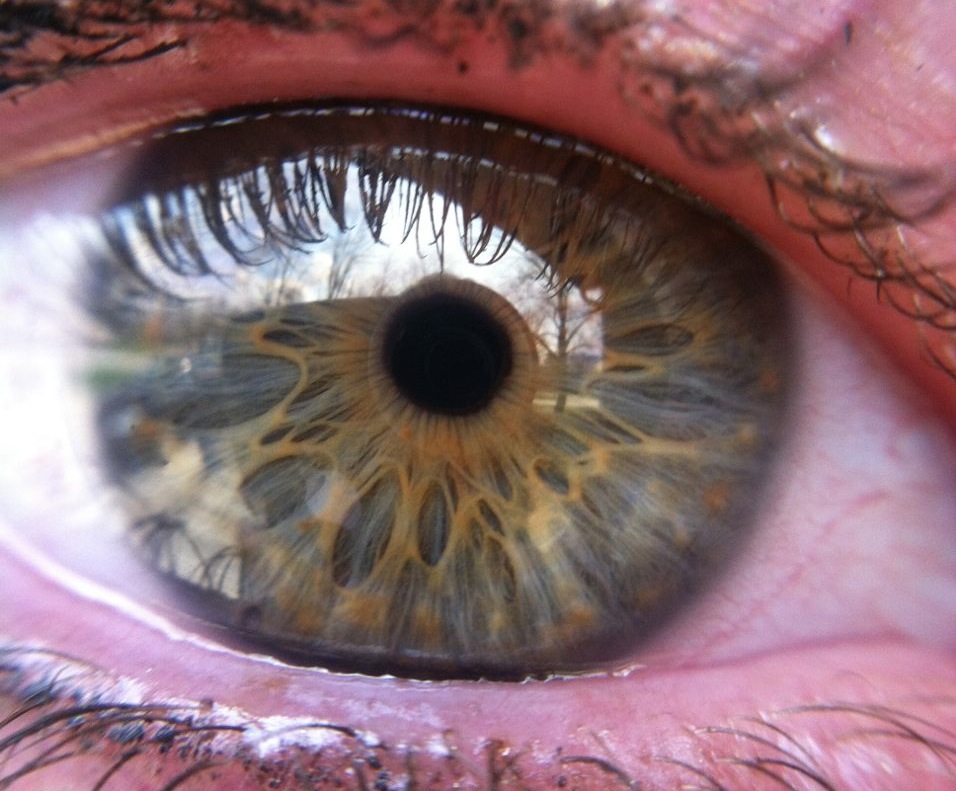
I had no idea that everyone's eyes were capable of glittering, the rind of the iris crisp and clear. Eye patterns? What's that? If you'd told me that an eye could contain spokes, webbing, or little stars, I'd have given you major side-eye. My awareness of eye color was limited to the information required for a driver's license: Blue, Green, Brown, maybe Hazel. I didn't know that an eye could resemble cracked aqua glass, or licorice nestled among moss.

 
This is the eye of my lovely friend Emily. Stunning.

This is the eye of my lovely friend Emily. Stunning.


I didn't know that hair color like dishwater blonde or mousy brown were mirages. I've seen ho-hum hair gain subtle highlights with the change of a drape. Hair that appears coated with baby powder against one drape is freshly-washed with the next.

I grew up on a media diet of airbrushing and Photoshop. I had no idea that rosacea, vitiligo, freckles, birthmarks, crow's feet, and other "imperfections" were no more imperfections than the texture caused by hammering silver.  I'd always found crow's feet particularly adorable, but in my mind they were something I found appealing in spite of their flawed nature.

I bought into my generation's truths about beauty and measured my worth against them.

In 7th grade a boy told me I had a big nose, so I spent over a decade assuming I'd get a nose job one day. I had a big gap between my front teeth, so I stopped smiling with my mouth open. I decided my breasts were too small, so I decided to wear push-up bras forever. I had naturally curly hair, so I woke up early every day to straighten it before school.

My daughter Simone is five. She's funny, empathetic, terrifyingly smart, and very pretty.

She has a gap between her teeth just like I do, and I think it's precious. She tells me that she loves the gap between her teeth because it makes her look like me.

At a bookstore last weekend, Simone was coloring at a table with another little girl. I heard the little girl ask Simone if she had lost a tooth. Without looking up from her picture, Simone said, "No, I just have a space between my teeth." The little girl passed her the sequins.

When you're sitting in my studio, I'm not interested in changing the architecture of your face, giving you paler skin or an artificial tan, fitting you into a fashion mold, or insisting that you need makeup to look your best. Makeup can be fun, but it's not necessary.

I believe that everyone is beautiful. Sometimes we just need help seeing it.

Understanding Hue, Value, and Chroma

"Blue tends to the dissolution of colour. It is not completely lost, but it can touch the line of the very distant."

-Vicente Verdú

Understanding the Munsell system of Hue, Value, and Chroma is crucial to understanding Personal Color Analysis and how the 12 seasonal tones differ from one another. Whether you know it or not, you already use these attributes to describe color, and they're really very basic.

Hue distinguishes one color family from another: red from blue, green from yellow, purple from orange. We often use "color" as shorthand for "hue" (myself included) but they are two different things. Every color has its own formula of hue, value, and chroma. The only exceptions in the Munsell system are the neutral black, white, and grey. These have neither hue nor chroma, only value, which we'll get to in a minute.

Munsell's hues consist of red, yellow-red (orange), yellow, green-yellow, green, blue-green, blue, purple-blue, purple, and red-purple. They come full circle, and are based on visual perception, not color mixing (as in paint, dye, or even frosting.) Every color in the world will fall somewhere on the hue circle, but there are two other dimensions at play.

Value is how dark or light a color is, with a lower value pertaining to darker colors, and a higher value pertaining to lighter colors. This dimension also refers to how much light reflects off a colored surface, and how the light is reflected off that colored surface. Glossy colors, for example, reach lower values than matte colors do, but reflected light can obscure the color. Ever tried to look at a magazine advertisement in the sunlight?

Chroma refers to how intense or grayed a color is. Neon colors have extremely high chroma, whereas muted colors have extremely low chroma. The larger a color's surface area is, the higher the chroma will be - which is why it's always suggested to test paint colors in a 2-foot square, rather than making decisions based on paint swatches. A yellow that looks soft and buttery on the paint chip can quickly turn egg yolk yellow when applied to an entire room.

So How Does This Apply to PCA?

Very simply. Christine Scaman often talks about The Most Important Thing. While each season has its own sweet spot of Hue, Value, and Chroma, one of these dimensions will be the most important. For the True seasons, it's either warmth (for True Spring and True Autumn) or coolness (for True Summer and True Winter). Our eyes perceive colors with red or yellow content as warm, and colors with blue content as cool. The True warm seasons have visibly yellowed grays, orange-y reds, and blues with red-purple undertones. The True cool seasons have reds, pinks, and purples with a strong blue presence.

For the Light and Dark seasons, the most important dimension is value. Light Spring and Light Summer have the highest (lightest) overall value in the range of palettes. While there are dark colors in the Light seasons, they are only dark within the confines of the palette. Toss one of Light Summer's dark colors into one of the Dark seasons and it will look light. Dark Autumn and Dark Winter have the lowest (darkest) overall value in the range of palettes. That deep richness is absolutely integral to the palette as a whole.

For the Soft and Bright seasons, the most important dimension is chroma, in opposite directions. Soft Autumn and Soft Summer have the lowest chroma in the palettes. The colors are dusky, gentle, and soft overall. By contrast, Bright Spring and Winter are vivid, intense, and bright overall.

Always remember that the most important dimension is still just one part of the formula. For example, Soft Summer is cool-neutral in hue, medium in value, and low in chroma. Chroma alone doesn't tell the whole story. A color can be quite dusky, but if it’s too cool, it might be a better fit for True Summer. True Spring is warm in hue, medium in value, and medium-high in chroma. Hue alone doesn't tell the whole story. A color can be quite warm, but if it’s too muted or dark, it might be a better fit for True Autumn.

One of my favorite things about the 12 tone system is that the palettes are mutually exclusive, although compromises sometimes need to be made for real-life dressing. Toss a Light Summer coral into the True Summer palette, and it won't quite work, even though the colors are seasonal neighbors. The Light Summer coral will simply be too warm, light, and even bright for the True Summer palette. Your eyes won't rest. I experience this a lot when pinning images to my seasonal Pinterest boards. I pinned a beautiful photo the other day of a woman in an olive green dress holding a violin. I put it in Dark Autumn first, but it looked off. I moved it to Soft Autumn and left it there for about a day. The next time I looked, it still wasn't right. I moved it to True Autumn and it settled in comfortably, like an old friend.

Color acuity is a skill like anything else, and with time, it can be learned. Luckily, in color analysis your main concern will be your own season, and perhaps its neighbors. You don’t need to memorize the precise hue, value, and chroma of each season, only your own.